
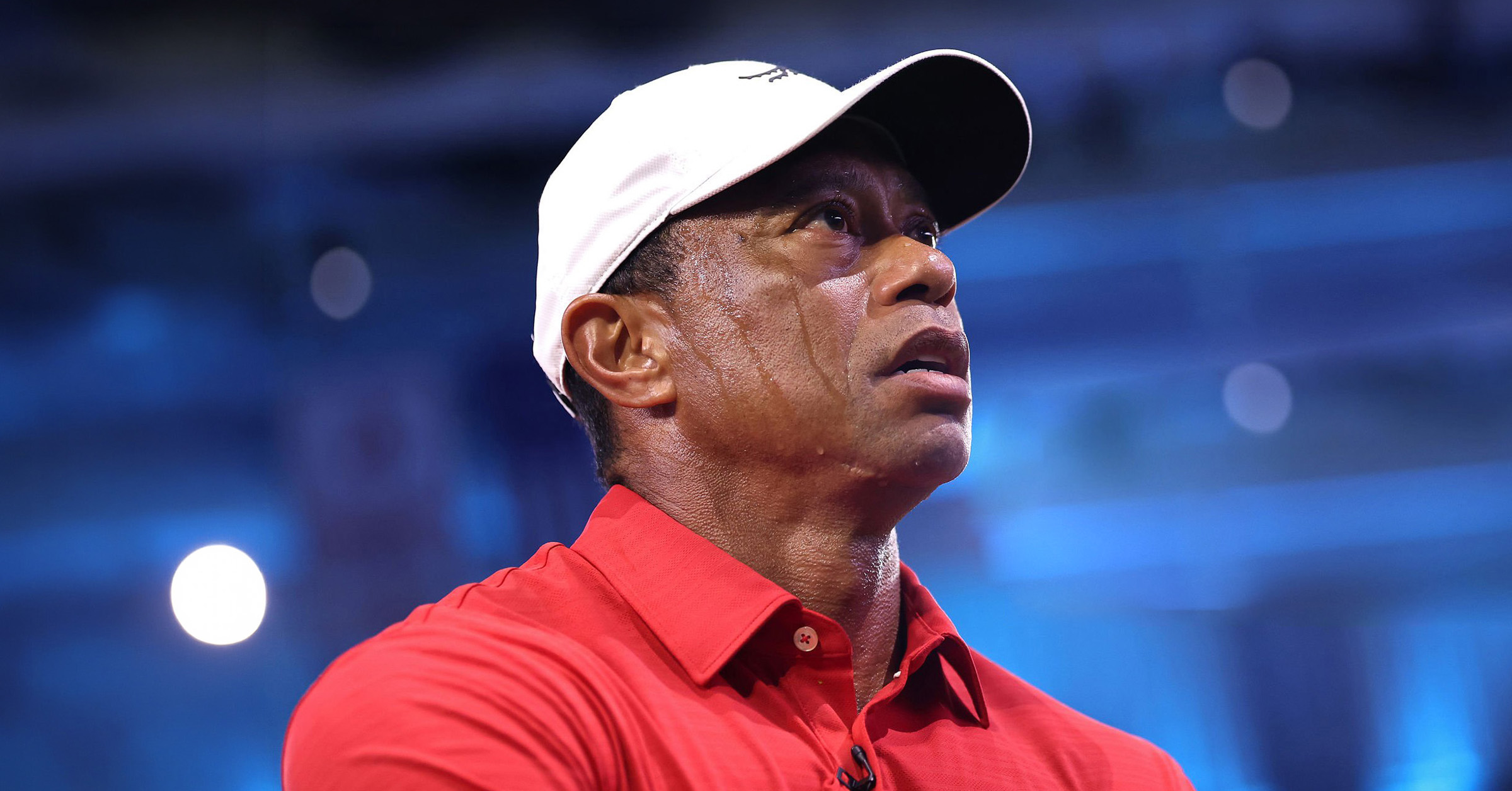
Tiger Woods remains the most influential figure in modern golf. Even without playing regularly, he holds powerful leadership roles and continues shaping the sport’s direction.
But alongside one of the greatest careers in history, Woods also carries a troubling pattern. A series of driving-related incidents over the years now raises questions not just about his personal judgment, but about his future role in golf’s leadership.
This latest episode adds to a timeline that is becoming difficult to ignore.
A History of Driving Incidents
In 2009, Woods crashed his SUV outside his Florida home in the early morning hours. No DUI charges were filed, but the incident sparked global headlines and marked the first time concerns around his driving entered public discussion.
In 2017, Woods was arrested by Jupiter police after being found asleep in his vehicle on the side of the road. Officers described him as incoherent. A toxicology report later revealed five prescription drugs in his system. Woods said the issue was caused by unexpected reactions to medication. He later pleaded guilty to reckless driving.
In 2021, Woods suffered the most serious crash of his life in Southern California. Driving at speeds well above 80 mph in a 45 mph zone, he crossed a median and struck a tree. The accident left him with severe leg injuries and nearly ended his career. Authorities did not test for drugs or alcohol. Investigators cited excessive speed as the primary cause.
Now comes the latest incident near his Jupiter Island home. Police said Woods’ vehicle clipped a trailer, causing his SUV to flip onto its side. No injuries were reported. Woods blew 0.0 on a breathalyzer test, but officers noted signs of impairment. He was arrested on suspicion of misdemeanor DUI with property damage and refusal to submit to a urine test. No public statement has been issued so far.
More Than Just Incidents
Individually, each case has its own explanation. Together, they form a pattern spanning more than a decade.
That is what makes this moment different.
Woods is no longer just a player. He is a central decision-maker in professional golf. He serves as a player director on the PGA Tour Policy Board, chairman of the Future Competitions Committee, and vice chairman of PGA Tour Enterprises.
These are influential positions that shape the sport’s structure and future.
Repeated off-course incidents do not erase Woods’ legacy, but they do raise questions about leadership optics and responsibility. Golf has always placed heavy emphasis on conduct and credibility. That standard becomes even more relevant when the individual involved is helping guide the sport.
What Happens Next
The PGA Tour is unlikely to take immediate action. Woods’ influence remains enormous, and his presence continues to carry weight across commercial and competitive decisions.
Still, this incident adds pressure. Even without formal consequences, repeated episodes can gradually affect perception and influence.
Tiger Woods’ legacy as a player is secure. His impact on golf is unmatched. But as he transitions from competitor to power broker, the expectations change.
The conversation is no longer about his greatness.
It is about judgment, leadership, and the role he plays in golf’s future.
And with each new incident, that conversation grows louder.