

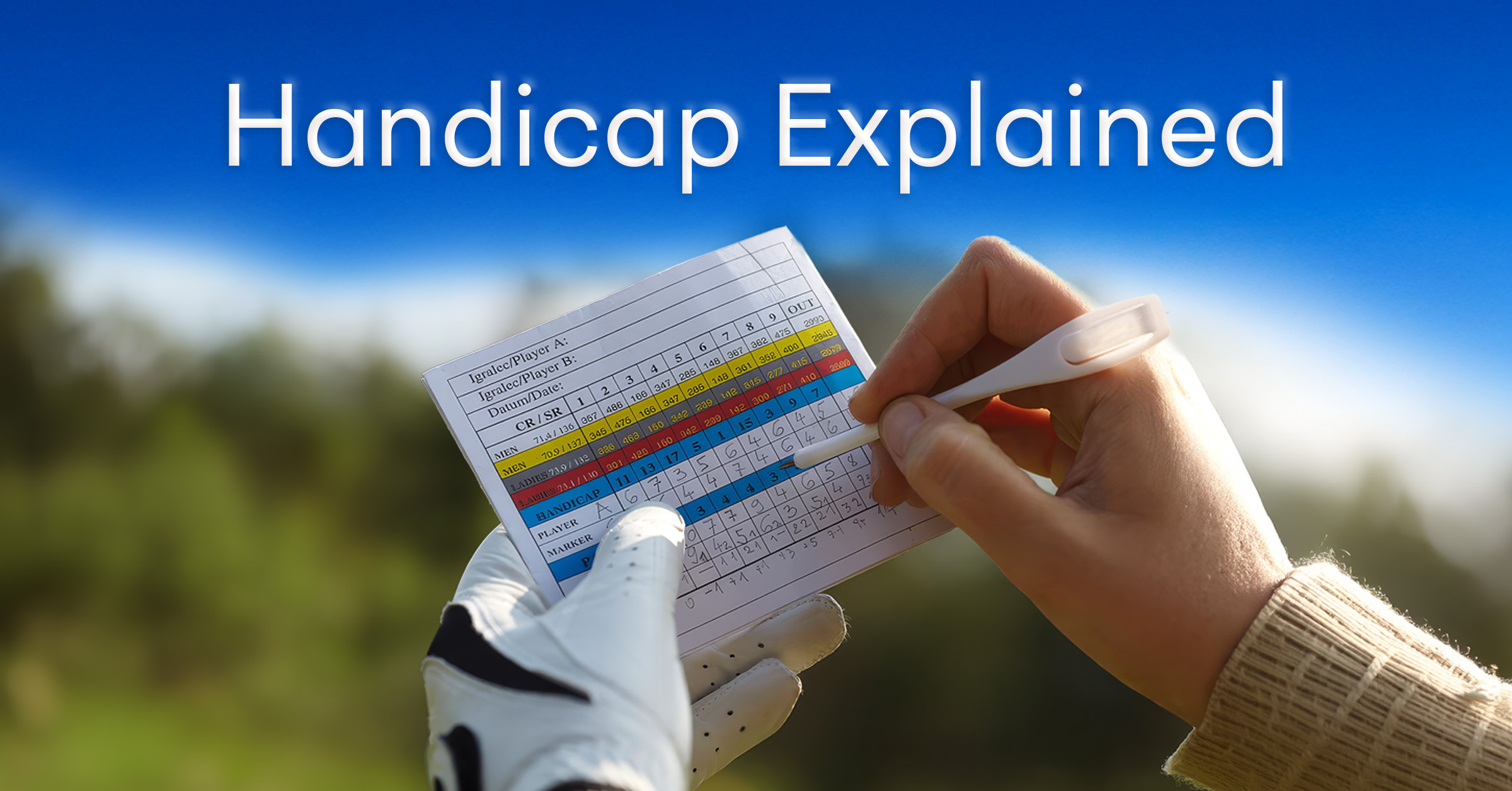
If you’ve ever heard someone say, “I’m a 12 handicap” or “He’s playing off 6,” and nodded like you understood — you’re not alone.
The golf handicap is one of the most confusing parts of the sport… until it suddenly becomes the most useful.
Because unlike most sports, golf is designed so that a beginner and an experienced player can compete on the same day — fairly. And the handicap system is what makes that possible.
So what exactly is a handicap in golf? And why does everyone take it so seriously?
Let’s break it down.
What is a Handicap in Golf?
A golf handicap is basically a number that represents your playing ability.
The simplest way to understand it is this:
The lower your handicap, the better you are.
The higher your handicap, the more strokes you need.
It’s not a trophy. It’s not a label. It’s a tool — designed to create fair competition.
Why Does Golf Even Need a Handicap?
Because golf isn’t like football or cricket.
In most sports, if you’re better, you win — end of story.
But golf has a unique problem:
- People play the same course
- From the same tees
- But with wildly different skill levels
So the handicap system exists to answer one question:
“How do we make this match fair?”
It gives players a way to compete, even if one person is much more experienced.
How Does a Handicap Work in a Match?
Let’s say:
- Player A is a 10 handicap
- Player B is a 20 handicap
Player B gets 10 extra strokes in the match.
Meaning:
Over 18 holes, Player B is allowed to play with a cushion — because statistically, they will take more shots to finish.
So the match becomes about who plays better relative to their ability, not just who is the better golfer overall.
What Does “Playing Off” Mean?
When someone says:
- “I’m playing off 12,”
they mean:
My handicap is 12.
It’s a casual way of saying where your game stands.
What’s a Good Handicap in Golf?
This is where golf gets interesting — because “good” depends on the context.
But broadly:
- 0 to 5 → Very strong golfer
- 6 to 12 → Good club golfer
- 13 to 20 → Regular golfer (most common range)
- 21 to 30 → Beginner / improving golfer
- 30+ → New golfer (still building consistency)
The truth?
If you can break 100 consistently, you’re doing better than most people think.
Is Handicap the Same as Your Average Score?
Not exactly.
This is a common misunderstanding.
Your handicap is not your average score.
It’s closer to your potential on a good day.
So if you usually shoot around 95, your handicap won’t necessarily be 23.
It will be based on your better rounds — because the system assumes you’re capable of improving and playing well.
How is Handicap Calculated? (Simple Version)
Without getting too technical:
Your handicap is calculated using:
- your recent scores
- the difficulty of the course
- the difficulty of the tees you played from
This is important because shooting an 88 on a tough course isn’t the same as shooting an 88 on an easier one.
The handicap system accounts for that difference.
Why Handicap Matters Even If You Don’t Play Tournaments
Even if you’re not a tournament golfer, handicap still matters because it:
1) Tracks your improvement
You don’t need to guess if you’re getting better — your handicap shows it.
2) Makes casual matches more fun
Handicap-based games make golf more competitive without becoming toxic.
3) Helps you find your real level
A handicap is one of the best ways to understand where you stand in the golf world.
The Real Point of Handicap
A handicap isn’t about ego.
It’s about fairness.
It allows:
- friends to compete
- corporate games to feel balanced
- club competitions to stay honest
- beginners to feel included
And most importantly, it makes golf feel like a sport where anyone can belong.
Final Thought
If you’re new to golf, don’t worry about having a “good handicap.”
Just focus on building a handicap.
Because once you have one, golf becomes more fun, more social, and surprisingly more addictive.